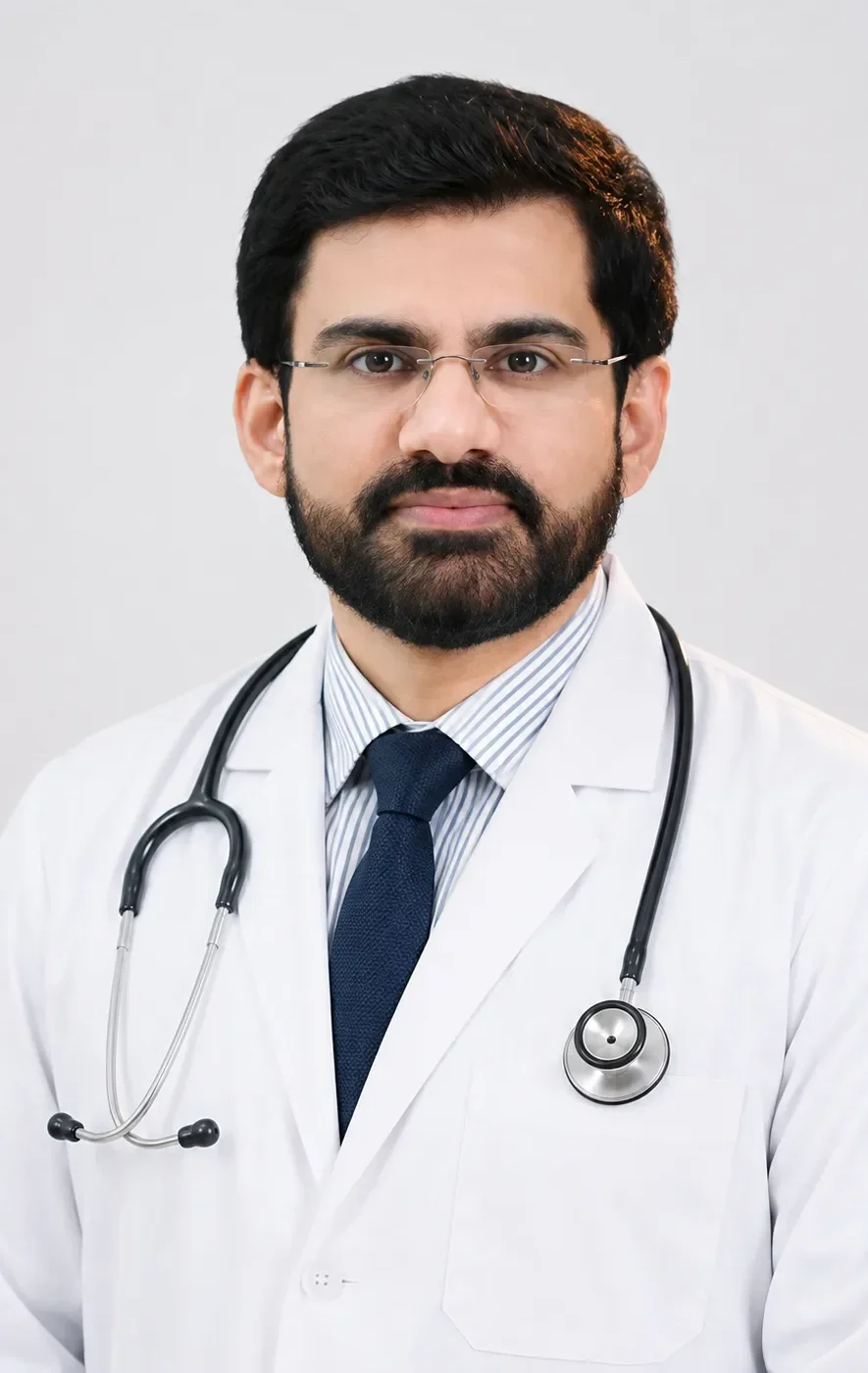
Platelet-rich plasma treatment for hair loss, skin rejuvenation and joint pain — prepared from your own blood and led by regenerative specialist Dr. Salman Gilani.
Every PRP plan at IRM begins with a medical assessment, so your treatment matches your diagnosis — not a one-size-fits-all package.





Scalp, skin, knees, tendons and sports injuries — every PRP application in one hospital, with stem cell and exosome options under the same roof.





➤ PRP Therapy Explained
PRP (platelet-rich plasma) therapy is a regenerative treatment that uses a concentrated portion of your own blood to support healing and renewal. A small blood sample is spun in a centrifuge to separate the platelets — the cells that release growth factors — which are then injected into the scalp, skin, joint or tendon being treated. Because PRP comes from your own body, it avoids donor material and synthetic drugs.
At IRM Hospital, PRP is offered for hair loss, facial and skin rejuvenation, and joint, tendon and sports injuries as part of our wider regenerative medicine services. The procedure is minimally invasive, takes about an hour, and most people go back to their normal day straight afterwards.
| Treatment type | Autologous (from your own blood), minimally invasive |
| Used for | Hair loss, skin rejuvenation, joint & tendon pain, sports injuries |
| Blood drawn | A small sample — similar to a routine blood test |
| Session time | About 45–90 minutes, depending on the area |
| Numbing | Topical cream or local anaesthetic, as needed |
| Typical sessions | 1–4, depending on the condition |
| Downtime | Minimal — most people resume their routine the same day |
| First changes | A few weeks; full effect builds over 2–6 months |
| Results last | Often 6–12 months or longer; maintenance may be needed |
| Led by | Dr. Salman Gilani, IRM regenerative medicine |
➤ The Science Behind PRP
Platelets are best known for helping blood clot, but they also carry proteins called growth factors that signal the body to repair tissue. When a blood sample is spun in a centrifuge, it separates into three layers. The thin platelet-rich layer in the middle is collected, giving a platelet concentration several times higher than normal blood — commonly cited as about five to ten times, depending on the preparation system.
Once injected, these signals can stimulate collagen, improve blood supply to hair follicles and calm long-term inflammation in damaged joints and tendons. PRP does not replace lost tissue overnight — it supports your body’s own repair process, which is why results build gradually over weeks and months.
➤ PRP Treatments at IRM
PRP is one of the most versatile treatments in regenerative medicine. At IRM it is used across three main areas — select one below to see what it treats. Dedicated pages for each treatment are on the way.

For thinning hair and early pattern hair loss (androgenetic alopecia) in men and women. PRP is injected into the scalp to support weak follicles, reduce shedding and improve density.

Diffuse thinning, a widening parting and persistent shedding — assessed first to rule out thyroid, iron or hormonal causes before PRP is planned.

PRP combined with scalp microneedling, or alongside other hair-loss treatments, to help growth factors reach the follicles, as advised by your doctor.

PRP applied with microneedling to improve skin texture, tone, fine lines and natural glow — often called the vampire facial.

Targets thin, crepey under-eye skin and the tired, hollow look it causes. Pigment-related dark circles may need a different approach.

Combined with microneedling to support collagen remodelling in depressed acne scars, enlarged pores and uneven texture.

For mild to moderate knee osteoarthritis and chronic joint pain — aiming to ease pain and stiffness and improve daily function.

Tennis and golfer's elbow, Achilles and patellar tendon problems, plantar fasciitis and rotator cuff conditions.

Supports recovery from sprains, strains and overuse injuries alongside a structured physiotherapy and rehabilitation plan.
➤ Is PRP Right for You?
Your doctor reviews your medical history and medicines, and may order blood tests or imaging, before recommending PRP. If another treatment is likely to work better for you, we will say so.
➤ Your Treatment Journey
Dr. Salman Gilani’s team reviews your history, examines the area and may order blood tests or imaging to confirm PRP is suitable.
A small amount of blood is taken from your arm — much like a routine blood test.
The sample is spun in a centrifuge for several minutes to separate and concentrate the platelets.
PRP is prepared under sterile conditions while the area is cleaned and numbed with cream or local anaesthetic.
PRP is injected into the scalp, skin, joint or tendon. For joints and tendons, ultrasound guidance may be used for accuracy.
You go home the same day with aftercare advice and a follow-up plan for any further sessions.
Speak to IRM’s regenerative team. We’ll assess your condition and tell you honestly whether PRP is the right option — or what would suit you better.
➤ Preparation & Aftercare
Most people feel a brief sting or pressure during the injections. Numbing cream or local anaesthetic keeps discomfort low. Scalp and facial treatments feel tender for a few hours; joint and tendon injections can ache for a day or two as the healing response begins.
➤ Results & Sessions
Everyone heals at their own pace, so your plan is personalised. The table shows typical ranges — your doctor will confirm what applies to you.
| Treatment area | Typical sessions | When you may notice results | Maintenance |
|---|---|---|---|
| Hair loss | 3–4 sessions, about 4–6 weeks apart | Less shedding in 4–8 weeks; visible density around 3–6 months | Top-up every 4–6 months to maintain |
| Face & skin | 2–3 sessions, about 4–6 weeks apart | Fresher skin within weeks; collagen builds over 2–3 months | Often 1–2 sessions a year |
| Knee & joints | 1–3 injections, a few weeks apart | Gradual relief over 4–12 weeks | Relief often lasts 6–12 months; repeat if helpful |
| Tendons & sports injuries | 1–2 injections plus rehabilitation | Steady improvement over 6–12 weeks | Usually a single course |
PRP results are not instant: platelets start a repair process that takes weeks to months. For progressive conditions such as pattern hair loss and osteoarthritis, results are also not permanent, so occasional maintenance sessions are normal and expected.
➤ Benefits & Safety
PRP has a strong safety record because it is made from your own blood — but it must be prepared and injected under sterile conditions by trained clinicians. At IRM, every PRP treatment is doctor-led and performed in a hospital setting.
➤ Evidence-Based Care
The honest answer: PRP works well for some conditions and some people, and less for others. Research is growing, but preparation methods differ from clinic to clinic, which affects results. Here is where the evidence stands today.

Knee osteoarthritis, pattern hair loss (androgenetic alopecia) and tennis elbow have the largest body of research, with many studies reporting improvements in pain, function or hair density.

Skin rejuvenation, acne scars, under-eye rejuvenation, Achilles and patellar tendon problems and plantar fasciitis show encouraging but more limited evidence.

Uses such as back pain, ligament tears and other conditions are still under research. We only recommend PRP where it has a reasonable chance of helping you.
Because no one can promise a specific outcome, IRM focuses on careful patient selection, consistent preparation and realistic expectations — and we’ll tell you if another option is more likely to help.
➤ Compare Your Options
| Treatment | What it uses | Commonly used for | How it works | Downtime |
|---|---|---|---|---|
| PRP therapy | Concentrated platelets from your own blood | Hair loss, skin, joints, tendons | Growth factors stimulate the body's repair | Minimal |
| Stem cell therapy | Living regenerative cells | Degenerative joint, neurological and autoimmune conditions | Cells support regeneration and calm inflammation | Minimal to short |
| Exosome therapy | Cell-derived vesicles carrying growth signals | Hair, skin and whole-body regenerative support | Signals boost cell-to-cell communication and repair | Minimal |
| Steroid (cortisone) injection | Anti-inflammatory medicine | Short-term joint and tendon pain relief | Suppresses inflammation | Minimal; repeated use is limited |
| Hair transplant | Your own hair follicles, moved surgically | Advanced baldness | Relocates permanent follicles | Several days |
PRP is often the first regenerative step. For more advanced conditions, your doctor may discuss stem cell therapy or exosome therapy — and some treatments can be combined. Joint and tendon PRP also works best alongside physiotherapy and rehabilitation.
➤ PRP Cost in Islamabad
PRP is priced per session, and your total depends on your condition and treatment plan. At IRM you receive a clear, itemised quote after your consultation — with no hidden extras.
Be cautious of unusually cheap PRP: low-grade kits, poor preparation or non-sterile settings can reduce results and raise the risk of complications.
➤ Why Choose IRM

Your PRP plan is overseen by Dr. Salman Gilani, who leads IRM's stem cell and regenerative medicine department.

IRM runs its own laboratory for regenerative treatments, so your care sits within a dedicated cell-therapy environment.

PRP is performed in a hospital, with doctor-led, sterile protocols — not in a salon or beauty parlour.

PRP, stem cell therapy, exosome therapy and physiotherapy are all available at IRM, so your plan can grow with your needs.
➤ Meet Your Specialist
Dr. Salman Gilani leads the regenerative medicine and stem cell department at the Institute of Regenerative Medicine and oversees PRP therapy at the hospital. He guides each patient from the first assessment to follow-up, matching the right regenerative option — PRP, stem cells or exosomes — to the condition being treated. Read his full profile, or message his coordinator directly to discuss your case.
“PRP works best when it is the right treatment for the right patient. We assess every case carefully, explain what results are realistic, and only recommend PRP when we believe it can genuinely help.”
— Dr. Syed Salman Naeem Gilani
➤ Who We Serve
Patients from Islamabad, Rawalpindi and the twin cities can book PRP at IRM with sessions that fit around work — most people return to their routine the same day.
Patients from Lahore, Peshawar, Faisalabad, Multan and other cities can plan PRP at IRM in Islamabad. Our coordinator can plan your assessment and sessions to keep travel to a minimum.
Visiting Pakistan from the UAE, UK, USA or Canada? Contact us before you travel so we can schedule your consultation and PRP sessions within your stay.
➤ PRP Therapy FAQs
PRP (platelet-rich plasma) therapy is a regenerative treatment that concentrates platelets from a small sample of your own blood and injects them into an area that needs repair or renewal, such as the scalp, face, a joint or a tendon. The growth factors in platelets help stimulate the body’s natural healing.
Your blood is spun in a centrifuge to separate the platelet-rich layer. When injected, platelets release growth factors such as PDGF, TGF-β and VEGF, which attract repair cells, stimulate collagen, improve blood supply and help calm long-term inflammation.
At IRM, PRP is used for hair loss and thinning, facial and skin rejuvenation (including acne scars and under-eye skin), knee and joint osteoarthritis, tendon and ligament problems such as tennis elbow and plantar fasciitis, and sports injuries.
Usually about 45–90 minutes in total, including the blood draw, preparation and injection. Facial treatments with microneedling and joint injections with ultrasound guidance may take a little longer.
It depends on the condition. Hair loss usually needs 3–4 sessions about 4–6 weeks apart, facial rejuvenation 2–3 sessions, and joint or tendon problems 1–3 injections. Your doctor will set a plan after assessing you.
Results build gradually. Skin may look fresher within weeks, hair shedding often slows within 1–2 months with visible density around 3–6 months, and joint pain relief usually develops over 4–12 weeks.
PRP can help reduce shedding and improve hair thickness and density, especially in early to moderate pattern hair loss. It does not stop the underlying cause, so results are not permanent and maintenance sessions are usually needed.
PRP works by strengthening existing, weakened follicles. Areas that are completely bald for a long time usually have no living follicles left, so PRP is unlikely to regrow hair there; a hair transplant may be more suitable.
Yes — PRP can help female pattern thinning and persistent shedding. Women are first assessed for causes such as thyroid problems, iron deficiency or hormonal imbalance, because treating the root cause matters for results.
Yes. PRP is often combined with microneedling and can be used alongside medical hair-loss treatments. It is also sometimes used around hair transplant procedures. Your doctor will advise the safest combination for you.
A PRP facial (often called a vampire facial) combines microneedling with PRP applied to the skin. The tiny channels help growth factors work in the skin to improve texture, tone, fine lines and glow.
PRP can improve thin, crepey under-eye skin, fine lines and depressed acne scars by supporting collagen production, usually over a course of sessions. Dark circles caused mainly by pigmentation may need other treatments.
Research shows PRP can reduce pain and stiffness in many people with mild to moderate knee osteoarthritis. It does not regrow lost cartilage, and results vary. Advanced arthritis may need other options, including stem cell treatment for osteoarthritis.
PRP is used for chronic tendon problems such as tennis elbow, Achilles and patellar tendinopathy and plantar fasciitis, and to support recovery from sports injuries. It works best alongside a structured rehabilitation programme.
No. PRP uses platelets and their growth factors from your blood; it contains no stem cells. Stem cell therapy uses living regenerative cells and is generally considered for more advanced or degenerative conditions.
PRP is made from your own platelets at the time of treatment. Exosome therapy uses exosomes — tiny cell-derived vesicles carrying growth signals — prepared in a laboratory. Both support regeneration and are sometimes used together.
Cortisone injections often relieve pain quickly but the effect can be short-lived, and repeated injections are limited. PRP works more slowly but may give longer-lasting relief for some conditions. Your doctor will recommend the better fit for your diagnosis.
Avoid anti-inflammatory painkillers for a few days, smoking, and strenuous exercise for the period your doctor advises. After hair PRP, don’t wash your hair for about 24 hours; after facial PRP, avoid make-up for 24 hours and strong sun for a few days.
PRP is charged per session, and the total depends on the area treated, the number of sessions, the preparation method and any combination treatments. IRM gives you a clear, itemised quote after your consultation.
Book a consultation with IRM’s regenerative team to find out whether PRP is right for your hair, skin or joints.