Regenerative Medicine at IRM Hospital Islamabad
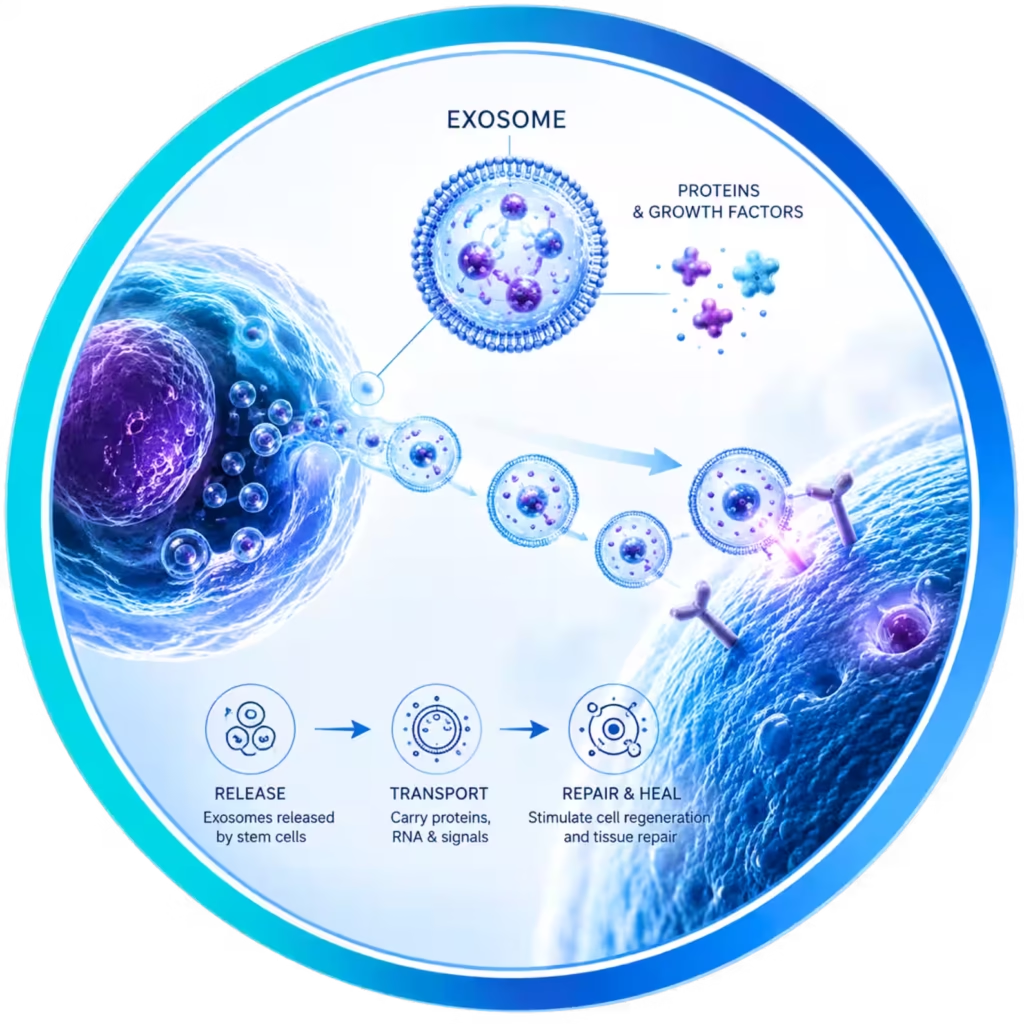
A minimally invasive, non-surgical regenerative treatment that uses exosomes — nano-sized vesicles that carry growth factors, messenger RNA, micro RNA and other signalling molecules — to support your body’s natural repair and rejuvenation. At IRM, exosomes are prepared in our own stem-cell laboratory.
Minimally invasive — injected into the area or given intravenously.
Supports cell-to-cell communication and healing across the body.
Many patients begin to notice changes from around 6–8 weeks.
Produced and quality-checked in IRM’s own stem-cell laboratory.
Understanding The Treatment
Exosome therapy is a regenerative treatment that uses exosomes — extracellular vesicles naturally released by cells to carry biological information from one cell to another. Exosomes play a vital role in the communication and rejuvenation of cells throughout the body.
Exosomes contain growth factors, messenger RNA, micro RNA, cytokines and other biologically active molecules. Used alongside stem-cell therapy, they can help signal and speed up the body’s own healing process. The treatment is minimally invasive: exosomes can be injected into an affected area, such as in orthopaedic injuries, or given intravenously for anti-ageing and whole-body support.
How It Works
Stem cells are usually responsible for rejuvenating older cells, but they may not supply all the information a tissue needs. Supporting exosome function can have an added positive effect by providing new information to enhance the healing process.
Exosomes carry genetic and molecular information between cells, acting as messengers that help coordinate repair.
Where ageing stem cells may not supply everything a tissue needs, exosomes can add fresh signals to enhance healing.
By supporting the body’s natural regeneration, exosomes are explored for orthopaedic, degenerative and anti-ageing care.
Conditions & Applications
Exosome therapy is a minimally invasive procedure commonly explored for orthopaedic injuries, anti-ageing and certain degenerative conditions. Dedicated treatment pages for each application are being developed.
Explored as part of regenerative support for chronic Lyme disease.
Used to support the scalp and hair follicles in thinning hair.
Applied in orthopaedic and joint conditions to support repair.
Supports skin quality and a refreshed, rejuvenated appearance.
Investigated as supportive care for long-standing degenerative conditions.
Given intravenously to support whole-body regeneration and vitality.
Speak with the IRM team to find out whether exosome therapy may be suitable for you.
Made At IRM — Not Imported
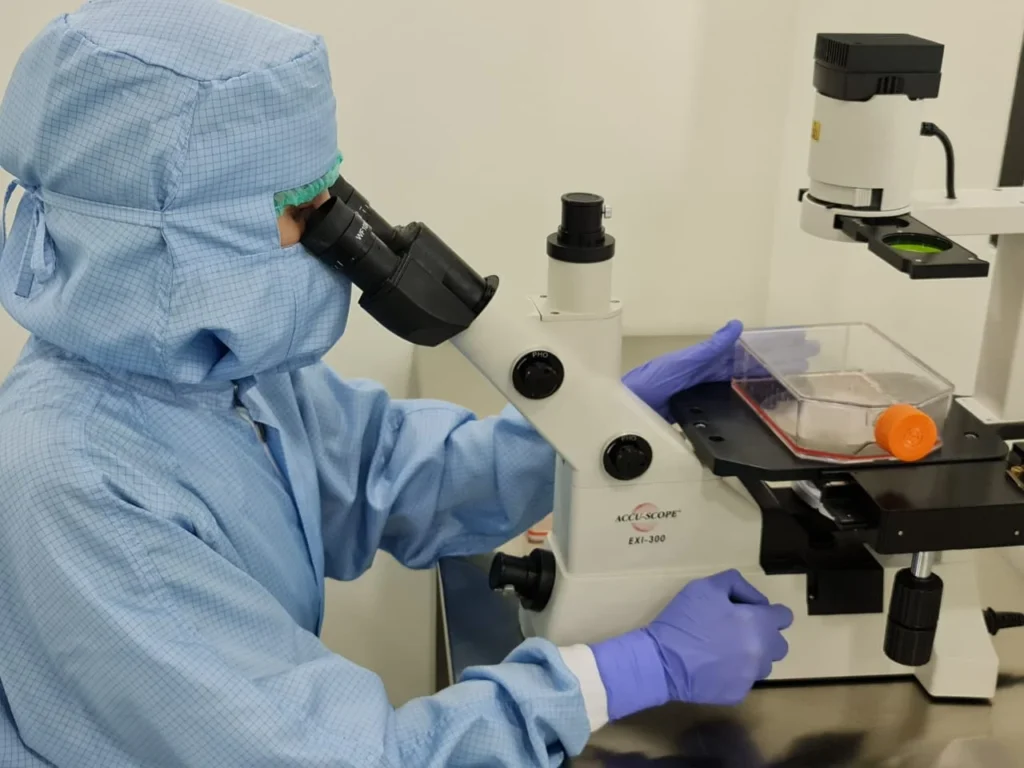
At IRM, exosomes are prepared in our own stem-cell laboratory under controlled conditions, then quality-checked before use.
The Patient Journey
Your suitability is assessed by qualified medical professionals before any treatment.
A minimally invasive session — exosomes are injected into the area or given intravenously.
Many patients begin to notice changes from around 6–8 weeks after the first session.
This depends on your condition — sometimes a single session, sometimes 3–4 for noticeable results.
Exosome therapy is a regenerative, evolving field. Individual results vary and no specific outcome or cure is guaranteed. A consultation is needed to determine whether the treatment is appropriate for you.
At IRM, exosome therapy is administered by qualified medical professionals — including stem-cell specialists, dermatologists and aestheticians — depending on the condition being treated. Because exosomes support regeneration across the body, the therapy can be considered for a range of concerns, from orthopaedic and degenerative conditions to skin and hair.
Your Questions, Answered
Exosome therapy is a minimally invasive regenerative treatment that uses exosomes — extracellular vesicles that carry growth factors, messenger RNA, micro RNA and cytokines — to support the body’s communication and healing processes, often alongside stem-cell therapy.
No. While it is popular for hair and facial rejuvenation, exosomes can be used for the whole body to support the process of regeneration.
Many patients begin to notice changes from around 6–8 weeks after the first session. Individual results vary.
It depends on the patient’s condition. Sometimes a single session is enough, and sometimes 3–4 sessions are needed for noticeable results.
They are made in our laboratory from stem cells that release exosomes, which are then concentrated by ultracentrifugation. Preparation takes place in a temperature-controlled incubator at 37°C, followed by concentration at low temperature.
We check that the product is sterile and run samples on a flow cytometer for qualitative analysis, supported by a qualitative flow-analysis report of the product.
Exosomes are stored at 4°C for short periods (around 3–4 days) and at −80°C in an ultra-low-temperature freezer for longer-term stability of several months.
The human placenta used as a source is obtained from our own hospital’s gynaecology department, after completing all consent requirements.
It is administered by qualified professionals — stem-cell specialist doctors, dermatologists and aestheticians — depending on the treatment.
No. It is a minimally invasive procedure. Exosomes are injected into the affected area or given intravenously, depending on the condition.
Contact IRM Hospital Islamabad to discuss exosome therapy and whether it may be right for you.
IRM Hospital: +92 331 4367367 • Coordinator (Dr. Salman): +92 336 4367367
